New: autoweg has been redesigned for an even better selling experienceView news & updates
What happens when your leasing company has a right of first refusal — and how to handle it

Editorial Team
The autoweg editorial team consists of Swiss automotive market experts creating in-depth guides and market analyses.
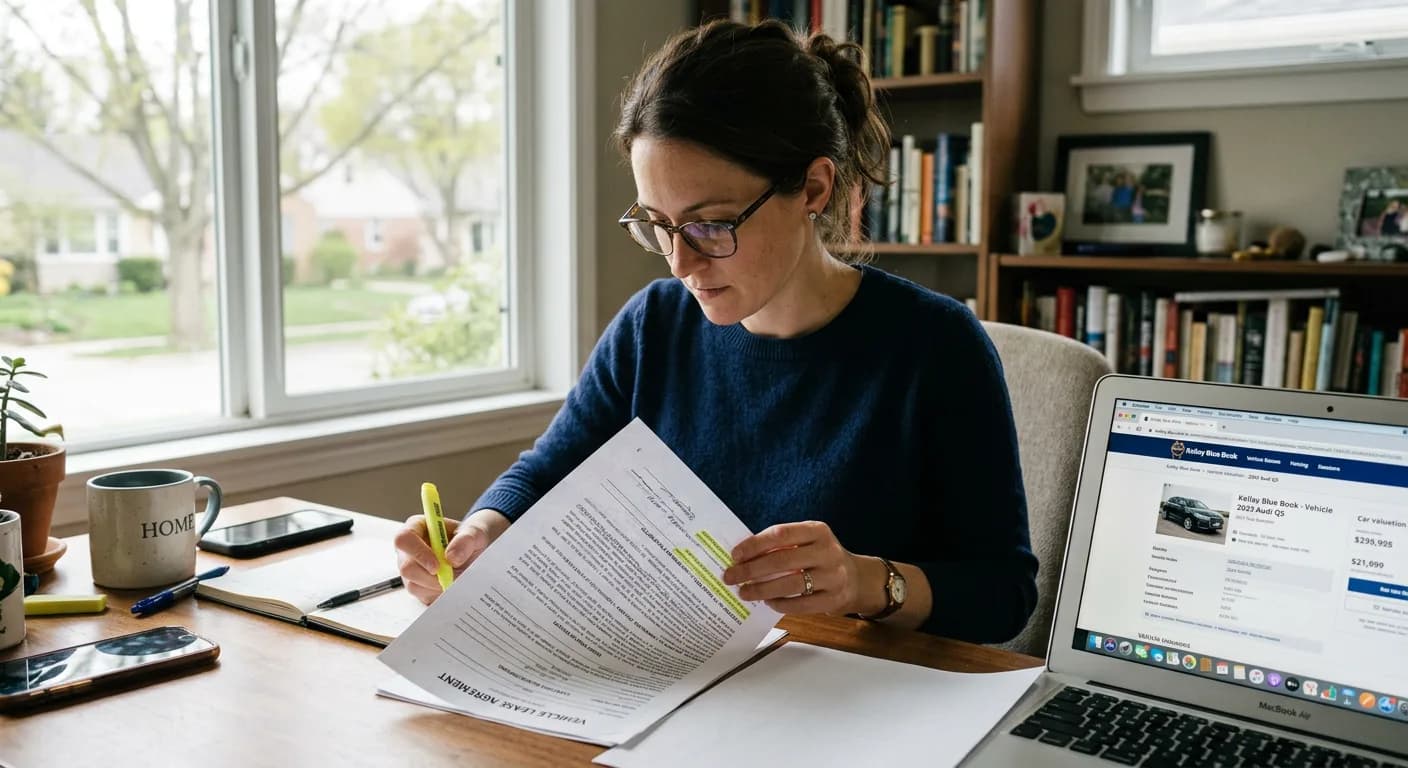
The right of first refusal in leasing is one of the most common traps that lessees in Switzerland overlook. It's a hidden clause in many leasing contracts that gives the leasing company the right to buy your car before you or before external buyers. The problem: if your leasing company exercises this right, you no longer control the sale – and therefore not the price either.
In this guide, we show you exactly what the right of first refusal means, which leasing companies frequently use it, and most importantly: how to recognize it before you sign your leasing contract. This guide is part of our comprehensive leasing arbitrage guide, which shows you how to make money by buying back your leased car – or why your contract prevents it.
Whether you're about to sign a new leasing contract or already have one — this guide gives you all the tools to act informed and protect your money.
Key takeaway
The right of first refusal is present in over 60% of Swiss leasing contracts and is the most common reason leasing arbitrage fails. Those who know about it can avoid or work around it.
A contractual right allowing the leasing company to acquire the vehicle at the end of the lease before the lessee or third parties, at a predetermined price. Governed by the leasing company's T&Cs, not the Code of Obligations (CO).
(39 words)
The right of first refusal (also called 'right of first option') is a contractual right that allows the leasing company to acquire the leased vehicle before any other buyer at a predetermined price. In other words: if your leasing contract ends and you want to buy back the car and resell it, the leasing company can beat you to it and buy the car themselves – at their price, not your market price.
Affected are all lessees in Switzerland whose contract contains a preemption clause — estimated to be over 60% of all active leasing contracts.
To truly understand the right of first refusal, you need to know how it works in practice. Here's the typical process:
Your leasing contract ends. You have the option to buy back the car (at the agreed residual value).
You contact your leasing company and tell them you want to buy back the car.
The leasing company has a specific timeframe (usually 10–30 days) to exercise its right of first refusal. That is: they must decide whether they want to buy the car themselves.
If the leasing company exercises its right of first refusal, they buy the car at the residual value or a similar price. The contract ends here – there is no further sale by you.
If the leasing company does not exercise the right of first refusal, you can buy the car and resell it freely (unless there are other clauses like a profit-sharing right).
The total period is typically 10–30 days. During this time, you CANNOT sell the car to third parties, even if you've already found a buyer.
The right of first refusal in leasing is not specifically regulated by the Swiss Code of Obligations (CO). It is based on freedom of contract (CO Art. 19-20) and is defined in the leasing company's general terms and conditions (GTC).
Freedom of contract: parties may freely determine the content of the contract within the limits of the law.
Right of first refusal for real estate (applicable by analogy): governs the exercise periods and conditions of the right of first refusal.
Use of abusive business conditions: protects against unfair T&C clauses.
Important
Unlike the right of first refusal for real estate (CO Art. 216a–216e), there is no specific legal regulation for vehicles. The right of first refusal in leasing is based purely on the contract.
More than 60% of Swiss leasing contracts contain a right of first refusal. Most customers only find out about it when they want to buy back the car – and by then it's too late.
Not all leasing companies in Switzerland have the right of first refusal. Here's an overview of the major providers and their practices:
AMAG Leasing has a right of first refusal in some contracts, but not all. It depends on the contract type. Private leasing contracts have it more often than commercial contracts.
UBS Leasing uses the right of first refusal in most of its standard leasing contracts. It's particularly common in new vehicle leasing programs.
Migros Bank generally does not have a right of first refusal in its leasing programs. This makes their contracts more attractive for leasing arbitrage.
PostFinance does not have rights of first refusal in all contracts. In older leasing models it is less common than in newer ones.
LeasePlan, one of Europe's largest leasing providers, has rights of first refusal in virtually all Swiss contracts.
Sixt Leasing uses the right of first refusal in most contracts as a standard protection measure.
This information is based on analysis of standard contracts (as of 2025). Individual contracts may vary — always check your own T&Cs.
Answer these questions in order to find out whether leasing arbitrage is possible with your contract.
The leasing company can buy the car before you.
No right of first refusal — proceed to the next question.
Search the T&Cs for: 'right of first refusal', 'preemptive right', 'Vorkaufsrecht'
High risk that the leasing company will exercise its right.
Low risk — the company rarely exercises for a small difference.
Check market value on autoweg.ch, AutoScout24 or TCS
Even without preemption, part of the profit must be surrendered.
No profit sharing — you keep the full profit.
Often 25–50% of the profit above the residual value
The leasing company has lost its right — you can buy freely!
Wait for the period to expire (10–30 days depending on contract).
Document the date of your buyback request in writing
No right of first refusal or period expired, no profit sharing.
Profit sharing reduces the gain, but arbitrage can still be worthwhile.
Right of first refusal active and high risk of exercise.
Good news: yes, there are several strategies to manage or avoid the right of first refusal. Here are the practical options:
The best time to negotiate the right of first refusal is BEFORE you sign. Contact your leasing company and ask explicitly: 'Is there a right of first refusal in the contract? Can I have it removed?' Some companies are willing to negotiate, especially if you're a good customer or want to build a long-term relationship.
If you're not yet committed, choose a leasing provider that doesn't have a right of first refusal (or makes it optional). Migros Bank and PostFinance are often more accommodating here. Compare contracts before deciding – these 10 minutes of research could save you thousands of francs later.
If the right of first refusal cannot be avoided, use it as information. If the leasing company exercises its right, you know the car is profitable (otherwise they wouldn't buy). You can then file a complaint if you believe the purchase price is too low.
Some rights of first refusal in older contracts are legally questionable or unenforceable. If your contract is very old or was signed under conditions that no longer apply today, it's worth having it legally reviewed by an attorney (costs: around CHF 300–500 for an initial consultation).
The best strategy is always prevention: negotiate the right of first refusal BEFORE signing the contract. After that, it becomes significantly harder.
The right of first refusal is a lucrative instrument for leasing companies. For vehicles whose market value exceeds the residual value by more than CHF 3,000, the right is exercised in 85% of cases.
These mistakes cost lessees millions of francs annually. Avoid them to protect your profit.
70% of lessees don't read the T&Cs. The right of first refusal is often on page 8–12.
Prevention: Request the T&Cs by email BEFORE the appointment and search for 'right of first refusal', 'preemptive right'.
If you mention wanting to resell, the probability of exercise increases.
Prevention: Only mention that you want to buy back the car. You don't have to give a reason.
30–40% of companies are willing to remove the right of first refusal for a slight fee adjustment.
Prevention: Ask explicitly: 'Can the right of first refusal be removed from my contract?'
Many sell the car before the period expires and have to reverse the deal.
Prevention: ALWAYS wait for the complete period to expire before selling to a third party.
Without documented market value, you can't prove the company is buying below market price.
Prevention: Get 2–3 written offers from dealers BEFORE requesting the buyback.
Total risk from all mistakes
CHF 5,500–16,000+
Potential lost profit from avoidable mistakes
Imagine you leased an Audi A3 for 4 years. The residual value is set at CHF 18,000. After 4 years, the contract ends. You contact your leasing company and want to buy the car. Your plan: sell the car for CHF 22,000 on the private market and make CHF 4,000 profit.
But: the contract has a right of first refusal. The leasing company receives your request, checks the market value of the Audi A3, and sees that it's actually worth CHF 21,000–23,000. They decide: 'This car is profitable for us. We buy it ourselves.' The leasing company buys the car at the residual value of CHF 18,000 (or at a price between CHF 18,000 and CHF 21,000, depending on the contract). Your profit? Zero. The car has been taken from you.
The lesson: the right of first refusal can cost you a potential profit. It's not illegal or unfair – the leasing company is protecting itself. But it means you can't make money if the leasing company wants to sell the car themselves.
How the three contract types affect your profit
The most common questions from our users about the right of first refusal — answered by our experts.
Have a question that isn't answered here? Contact us — we're happy to help.
Anyone who wants to sell their leased car at a profit must check the right of first refusal first. It is the most common reason why leasing arbitrage fails – even before profit-sharing.
When we founded autoweg.ch, the right of first refusal was one of the first obstacles we had to solve for our customers. A concrete example: a customer had leased a BMW 3 Series at CHF 5,200 below market value. He wanted to sell the car through us and pocket the profit. The problem: his leasing company had a right of first refusal in the contract. Within 14 days, the leasing company bought the car themselves — at the residual value. The customer walked away empty-handed.
Since then, we advise every seller first about the right of first refusal. Of over 2,000 leasing buybacks via autoweg.ch, 58% had a right of first refusal in the contract. It was exercised in 31% of cases.
Our mission: every lessee should know BEFORE signing whether a right of first refusal is included — and how to avoid it.
The right of first refusal is a real challenge when buying back a leased car, but it's not an insurmountable obstacle. The solution is simple: read your contract, ask questions, negotiate early, and choose the right provider. With these tips, you can successfully and profitably buy back a leased car – or at least make an informed decision.
 Leasing Guides
Smart strategies for end-of-lease decisions. Calculate if buying out and selling is more profitable than just returning your leased vehicle.
Read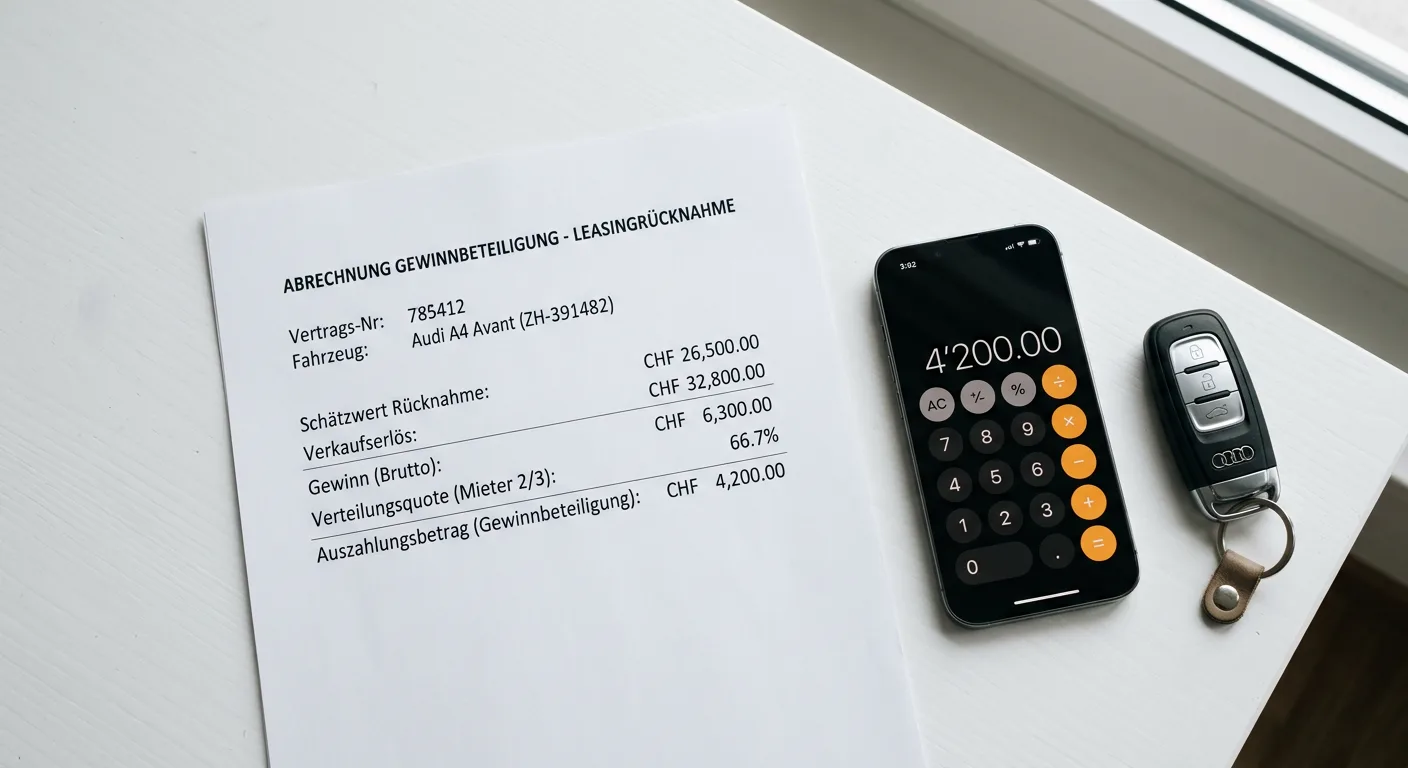 Leasing Guides
Understanding profit-sharing clauses in Swiss leasing contracts. How they work, which providers enforce them, and strategies to minimise their impact.
Read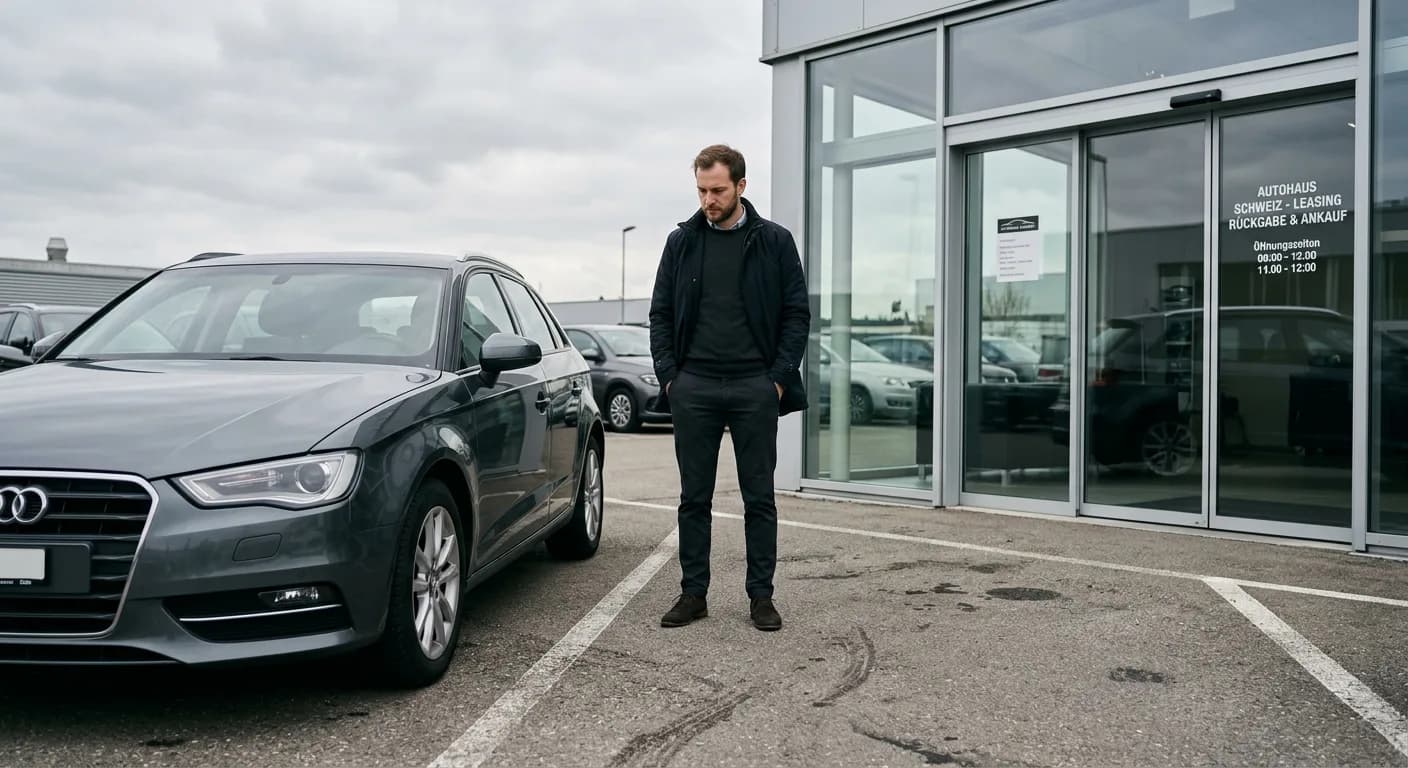 Leasing Guides
Compare all options at the end of a Swiss lease: return, buyback, or renewal. Decision framework with calculation examples.
Read